
2026-09-14 ·
Cost Comparison: Traditional Tank Versus Tankless In Torrance
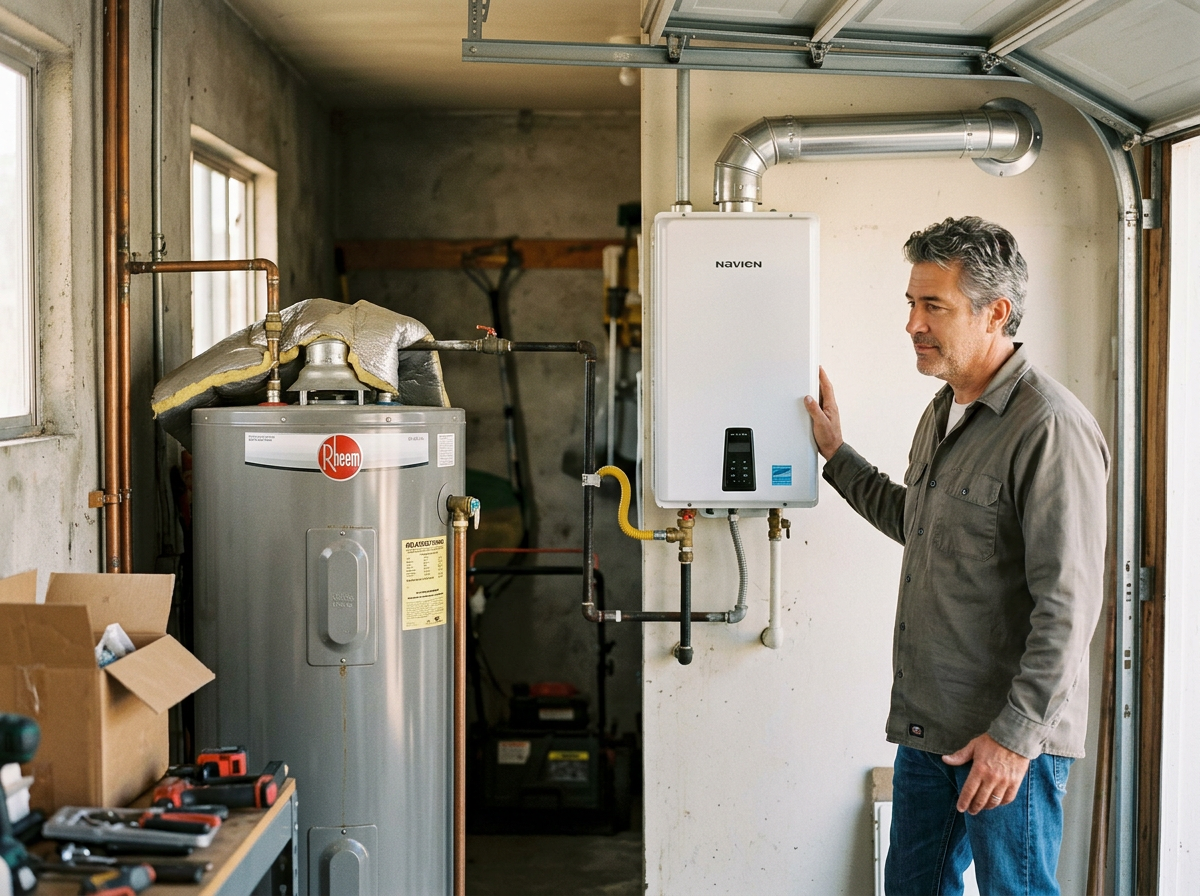
In Torrance a traditional tank water heater generally lasts 8-12 years while a tankless model commonly reaches 20 years or more, yet the tankless route demands larger gas lines and proper venting to meet local seismic and closed-system rules.
Lifespan and Replacement Frequency
Traditional 40- or 50-gallon tanks in coastal Torrance homes face shorter service lives because softer water still allows sediment buildup that accelerates corrosion at the bottom of the tank. Most units require replacement once the glass lining fails and leaks appear, often between 8 and 12 years. Tankless units avoid stored water and therefore avoid this sediment cycle, frequently operating 20 years before the heat exchanger needs attention. Homeowners who stay in one property long enough see fewer full replacements with tankless equipment, though the initial changeover still requires a licensed plumber to handle the 18-inch garage clearance and FVIR combustion requirements. Regular flushing extends tank life but cannot match the inherent durability of a tankless heat exchanger under the same water conditions.
Installation Requirements Under California Code
Switching from a tank to tankless in Torrance starts with verifying gas line capacity because tankless units need higher flow rates measured in gallons per minute to handle simultaneous showers and appliances. Existing half-inch lines often must be upsized to three-quarter inch or larger, and new stainless-steel venting must exit the roof or sidewall with the correct slope. Seismic strapping must secure any remaining tank or the tankless unit itself at the top and bottom per code, while closed systems need a thermal expansion tank to protect the new equipment. The 18-inch garage rule keeps FVIR burners above floor level where gasoline vapors might collect. These steps add labor and materials but are non-negotiable for permit approval in the South Bay.
Energy Use and Operating Costs
Tank water heaters keep 40 or 50 gallons of water hot around the clock, losing heat through the tank walls even when no one is using hot water. Tankless units heat water only on demand, which reduces standby loss in mild Torrance winters when groundwater temperatures stay above 55 degrees. The actual savings depend on household size and how often multiple fixtures run at once, because a single tankless unit sized for 5-7 gallons per minute may still require a second unit for larger homes. Hard water inland from Torrance can leave scale on tankless heat exchangers faster than on tank elements, so annual descaling becomes part of the operating routine. Over time the difference in energy consumption and replacement frequency determines which option costs less for a specific address.
Hard Water and Maintenance Needs
Torrance sits near the coast where water is softer than inland desert supplies, yet scale still forms on heating surfaces and shortens element life in electric tanks. The blog post How Hard Water Affects Water Heater Elements In Torrance explains the visible signs of buildup. Tankless models need periodic vinegar flushing to keep flow sensors accurate, while tanks benefit from the annual sediment flush described in How To Flush Sediment From A Water Heater Tank. Both systems require inspection of the temperature-and-pressure relief valve and anode rod where applicable. Choosing the right service path starts with a review of the existing installation before any upgrade decision.
Choosing the Right Replacement Path
Homeowners evaluating options often begin with a site visit that checks gas meter capacity, existing venting routes, and whether the home sits on a closed water system. A water heater replacement consultation can outline code-compliant steps without committing to one technology. Properties in the foothills that use propane or well water face extra considerations for combustion air and mineral content that differ from coastal Torrance conditions. Reviewing these factors in advance prevents mid-project changes and ensures the final system meets both efficiency goals and Torrance permitting standards.