
2026-09-14 ·
What To Expect During A Water Heater Replacement In Torrance
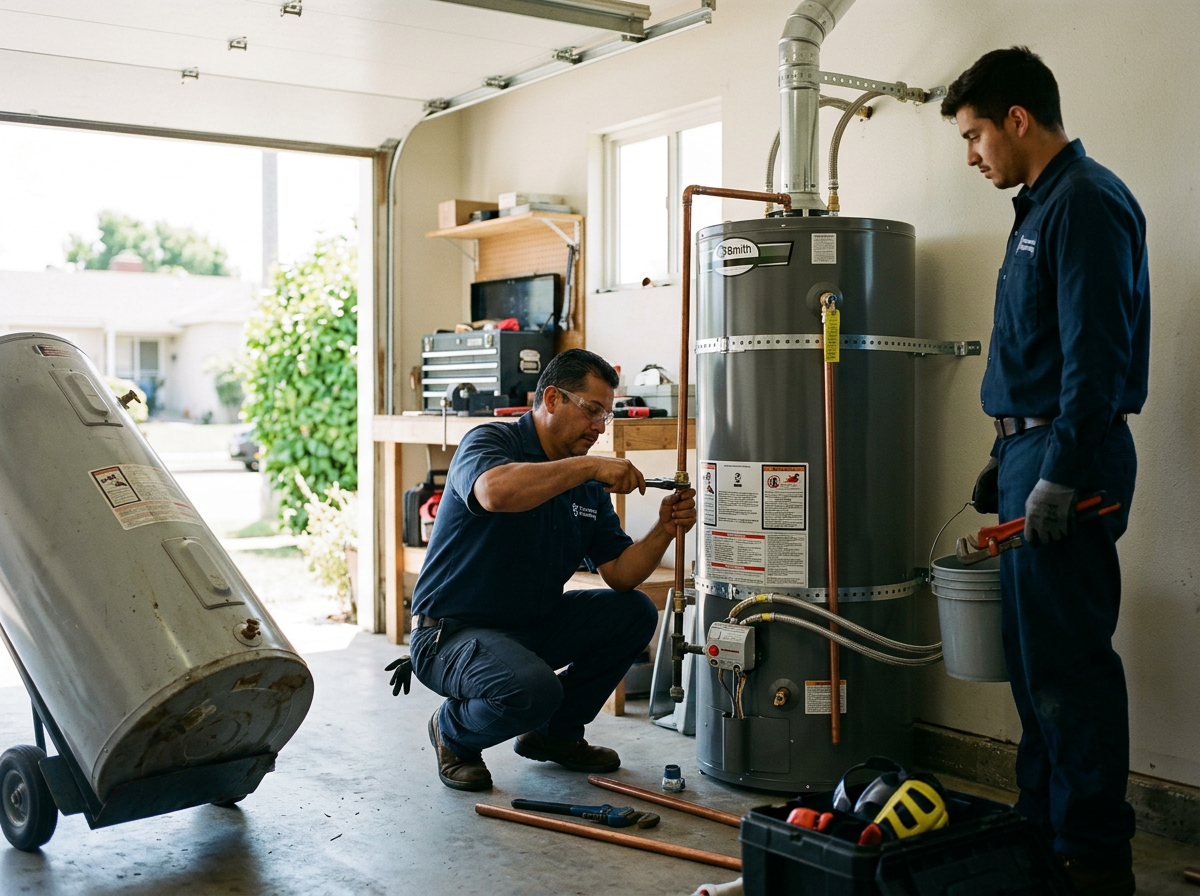
A water heater replacement in Torrance usually takes four to eight hours on site once the old unit is drained and disconnected. The timeline stretches when the existing installation lacks proper seismic strapping or when the gas line must be upsized for a higher-recovery model. Crews begin by shutting off utilities and confirming the 18-inch garage clearance rule is met for FVIR-compliant units. They then remove the old tank, install the new one with required thermal expansion provisions on closed systems, and finish with pressure and temperature checks. Coastal Torrance homes often need fewer anode adjustments than inland properties because the water is softer.
Site Assessment and Code Preparation
Before any tools come out, the technician inspects the current water heater location, venting path, and gas or electric supply. In Torrance, every replacement must meet current seismic strapping requirements, which means straps placed at the upper and lower thirds of the tank and secured to wall studs. The inspection also checks for a thermal expansion tank on homes with a backflow preventer. If the unit sits in a garage, the 18-inch elevation rule is verified to protect the FVIR sensor from flammable vapors. This upfront review prevents mid-job surprises and ensures the new 40- or 50-gallon tank will pass final inspection. Homeowners receive a clear list of any needed corrections before work begins.
Removal of the Existing Water Heater
Once utilities are isolated, the old tank is drained through the T&P valve or a dedicated drain line. Technicians disconnect the water lines, gas flex connector or electrical supply, and venting. In older Torrance homes the venting may be single-wall pipe that must be replaced with double-wall B-vent to meet current code. The unit is then carefully lifted out, often requiring two people because a full 50-gallon tank can weigh more than 400 pounds. Any sediment that has accumulated from local water chemistry is noted so the new installation can include proper flushing valves. The space is cleaned and the floor checked for level before the new unit arrives.
Installation Steps and Required Upgrades
The new water heater is set in place and leveled. Seismic straps are installed at the specified heights and anchored into studs. The T&P valve is fitted with a discharge pipe that terminates no more than six inches above the floor and directs water to a safe location. On closed systems a thermal expansion tank is added. Gas models receive a new flex connector and, when required, a larger-diameter gas line to maintain adequate flow. Electric models have their circuit and disconnect verified. After connections are made, the tank is filled, air is purged, and the unit is fired or powered on for a test cycle that confirms temperature rise and leak-free operation.
Final Testing and Handover
The last phase includes checking for gas leaks with a soap solution, verifying the T&P valve opens at the correct pressure, and confirming the thermostat setting. Homeowners are shown the location of the shutoff valves and the expansion tank. If the replacement involves coastal conditions, the technician may note the expected anode rod service interval. The job site is left clean and the old tank is hauled away. For questions that arise after the crew leaves, the Water Heater Repair page outlines common follow-up items. Additional detail on strapping rules appears in the Seismic Strapping Requirements For Water Heaters In Torrance article, and coastal anode guidance is covered in How Often Should You Replace Anode Rods In Coastal Homes.