
2026-09-14 ·
Preventing Water Heater Leaks After Torrance Rainy Season
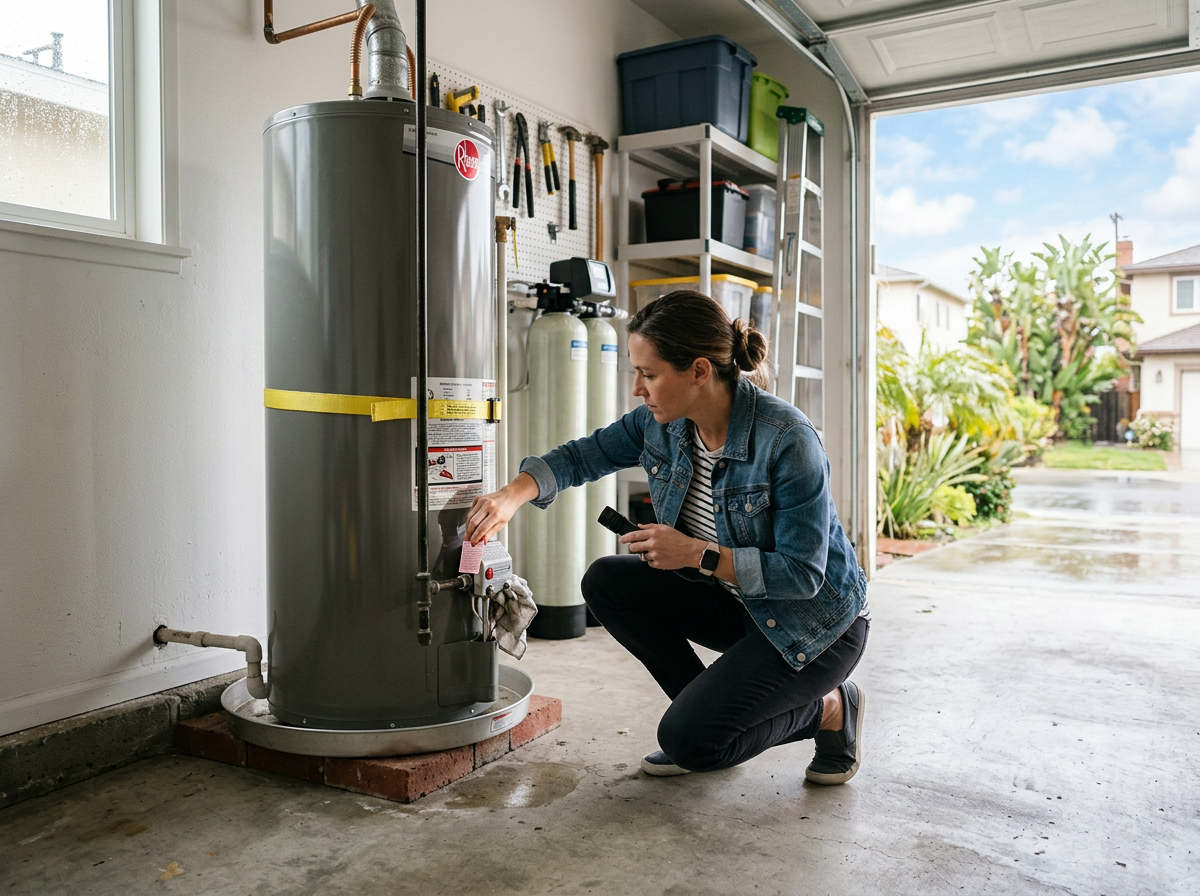
After Torrance rainy season, leaks often trace back to loosened seismic strapping or failed expansion tanks that allow pressure spikes once temperatures stabilize. Checking these elements within the first dry weeks prevents most post-rain failures on both 40-gallon and 50-gallon tanks.
Inspecting for Moisture and Corrosion After Rain
Torrance coastal air holds extra humidity after winter storms, which speeds rust on tank exteriors and fittings. Walk around the unit and look for water stains on the floor or rust streaks along seams. Pay special attention to the bottom where the drain valve sits and to any areas where condensation collects on cold pipes. If you notice dampness near the T&P valve or anode rod access, schedule a service visit before the next storm cycle. Coastal Torrance water is softer than inland supplies, yet salt air still corrodes metal faster than drier inland zones. Document any new spots with photos so changes become obvious over time. These visual checks catch small issues before they turn into floor-damaging leaks.
Ensuring Proper Seismic Strapping
California code requires two straps on every tank: one in the upper third and one in the lower third, secured to wall studs with 1/4-inch lag screws. Rainy season ground movement can loosen these straps or pull them away from drywall. Stand on a sturdy step stool and tug each strap to confirm it holds firm without shifting the tank. Look for missing or corroded brackets, especially on units installed before 2010 when strap standards tightened. Loose strapping lets the tank rock during aftershocks or even during heavy truck traffic, cracking inlet and outlet connections. If straps show wear, replace them with current code-compliant kits before leaks develop at the threaded fittings.
Managing Thermal Expansion in Closed Systems
Modern Torrance homes with backflow preventers create closed systems where heated water has nowhere to expand. Without a properly sized thermal expansion tank, pressure builds and forces leaks at the weakest joint, often the T&P valve or supply lines. After rainy season, test the expansion tank by pressing its Schrader valve; air should escape with a hiss, not water. If water comes out, the bladder has failed and the tank needs replacement. Typical residential expansion tanks hold 2 to 4 gallons and mount on the cold-water line above the heater. Checking this component each spring keeps pressure spikes from pushing water past gaskets weakened by winter moisture.
Verifying T&P Discharge and Garage Installation Rules
The temperature and pressure relief valve must discharge to a safe location, usually within 6 inches of the floor or to the exterior. After rain, check that the discharge pipe remains clear of debris and has not shifted. In garages, the 18-inch rule keeps the burner or elements above potential flood levels; confirm the tank still sits on its 18-inch platform. FVIR-compliant units also need unobstructed combustion air vents. Any blockage from storm debris can cause overheating and valve activation that leads to leaks. These checks take minutes yet stop the most common rainy-season failures before they require emergency water heater leak repair.
If straps, expansion tanks, or discharge lines show repeated issues, review signs your water heater needs replacement this winter and consider water heater replacement before the next season. Hard water effects remain minimal along the Torrance coast, but salt air still shortens tank life to roughly 8–12 years on average.